
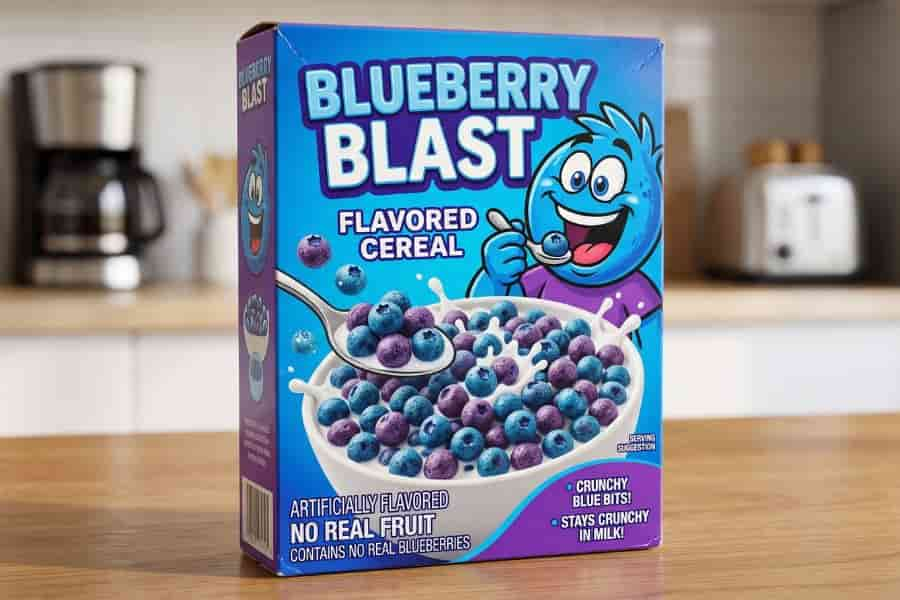
Created with AI, but our digital operations run net-negative thanks to waterless cooling and 100% renewable infrastructure.
When you spread blueberry jam on toast, or pour a bowl of blueberry morning cereal, you likely picture fresh, plump berries picked straight from a sunlit bush. The packaging often reinforces this image: vibrant deep-blue fruit, dewy leaves, and bold lettering promising real fruit flavor.
However, if you flip the box over and read the fine print in the ingredient list, you might encounter a surprise: no blueberries at all. Instead, you find ingredients like sugar, corn syrup, starch, artificial dyes, and “natural flavor.” How can food companies legally sell blueberry products without a single berry inside? The explanation involves food chemistry, manufacturing logistics, economic pressures, and labeling regulations.
The Economic Equation: Real Fruit vs. Imitation “Bits”
The primary reason food manufacturers skip actual blueberries comes down to cost. Cultivating, harvesting, sorting, freezing, and shipping fresh or freeze-dried blueberries is expensive. Crop yields fluctuate based on droughts, late frosts, insect pests, and shifting regional climates, which makes wholesale prices volatile.
For processed, shelf-stable foods that sell for a few dollars a box—such as toaster pastries, powdered muffin mixes, and snack bars—using 100% genuine fruit drives production costs too high. To maintain profit margins and keep shelf prices low, food scientists engineer blueberry bits or crunchlets.
These mock berries are typically composed of:
- Sugars and syrups: Dextrose, high-fructose corn syrup, or regular sucrose provide sweetness and structure.
- Modified starches and gums: Alginate, pectin, or cornstarch create a gel-like, chewy texture that mimics the pulp and skin of a cooked berry.
- Artificial colors: A combination of Red No. 40, Blue No. 1, and Blue No. 2 produces the characteristic deep purple-navy hue.
- Hydrogenated vegetable oils: These fats keep the imitation bits stable so they don’t melt into syrup during baking.
Creating an imitation bit costs a fraction of sourcing real fruit, never goes out of season, and behaves predictably on high-speed factory conveyor belts.
The Fine Print: Packaging Law and “Flavored” Goods
Food labeling laws in North America require food packages to be truthful, but regulations distinguish between what a product is and what it tastes like.
Regulatory agencies, such as the U.S. Food and Drug Administration (FDA) and the Canadian Food Inspection Agency (CFIA), allow companies to use the word “Blueberry” on the front panel as long as it describes the characterizing flavor rather than the primary ingredient.
- If a box says “Blueberry Muffins,” consumers often expect real fruit, and regulatory guidelines generally require either actual blueberries or prominent qualifiers.
- If a box states “Blueberry Flavored Muffins” or “Artificially Flavored,” the manufacturer is only required to supply the flavor profile.
- Pictures of fresh fruit on the front of the box are often legally permissible even if the product contains only synthetic flavoring, provided the phrase “artificially flavored” or “serving suggestion” appears nearby.
To identify what you are truly eating, skip the marketing claims on the front of the carton. Scan the Ingredients List on the back. Ingredients are ordered by weight from highest to lowest. If you see “blueberries” near the top, you are getting the real thing. If the list jumps straight from flour and sugar to cornstarch, Red 40, Blue 1, and “artificial flavor,” you are looking at clever culinary chemistry.
Beyond the culinary deception, substituting real fruit with synthetic substitutes strips away the nutritional perks commonly associated with blueberries. Authentic blueberries are widely celebrated as a “superfood” because they are packed with dietary fiber, vitamin C, vitamin K, and potent antioxidants like anthocyanins—compounds known to help reduce oxidative stress, support cardiovascular health, and protect cells from damage. In stark contrast, artificial blueberry bits offer none of these functional advantages. Because they are engineered primarily from refined sugars, modified starches, hydrogenated fats, and petroleum-based food dyes, they contribute empty calories rather than micronutrients. Choosing an artificially flavored blueberry bagel or snack bar under the assumption that you are making a health-conscious fruit choice ultimately leaves you with all the added sugar and refined carbohydrates, but none of the fruit’s actual health benefits.
So why not do yourself a favor. Instead of buying that artificially flavored cereal, why not buy frozen wild blueberries to spread over your cereal?